Corporate Cash Is Not Personal Wealth: Three Planning Ideas for Business Owners
Retained earnings inside a Canadian corporation can create flexibility, but extracting or using that cash requires careful tax planning. Learn three planning areas business owners should review.
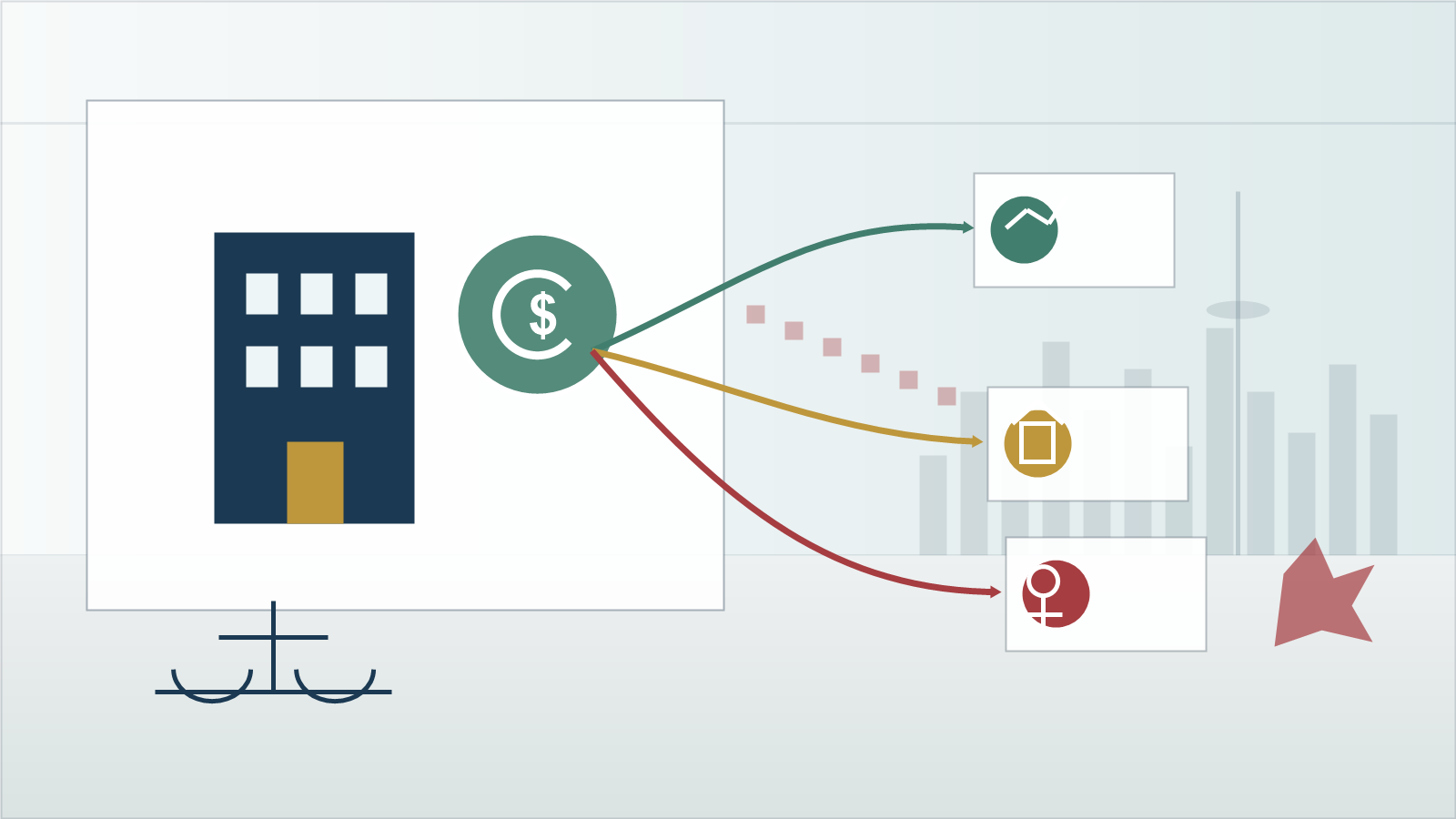
Corporate Cash Is Not Personal Wealth: Three Planning Ideas for Business Owners
Many Canadian business owners eventually face the same problem: the corporation is profitable, cash is building up, but the owner is hesitant to move money out.
That hesitation is understandable. Money inside a corporation is not the same as money in a personal bank account. Once cash is paid out to the shareholder, it may be taxed as salary, dividends, or another form of shareholder compensation. The right choice depends on the owner's income level, province, family situation, corporate structure, retirement goals, and broader tax plan.
The goal is not to avoid tax improperly. The goal is to use corporate cash intentionally, legally, and strategically.
Below are three planning areas that Canadian business owners should review with qualified tax and financial professionals.
1. Plan the Extraction Strategy Before You Need the Cash
One of the most common mistakes is waiting until cash is urgently needed before deciding how to pay it out of the corporation.
At that point, the owner may have fewer options. A rushed withdrawal can create unnecessary personal tax, disrupt the corporation's cash flow, or interfere with other planning opportunities.
Shareholder compensation can involve salary, dividends, bonuses, shareholder loans, repayment of capital, or other structures depending on the facts. Each has different tax, CPP, RRSP, cash-flow, and reporting implications.
Some business owners also consider financing or investment strategies rather than immediately distributing corporate cash. These strategies can be complex and may involve market risk, interest-rate risk, debt-service obligations, and tax compliance issues. They should not be treated as a simple shortcut.
Before moving money, ask:
- How much cash does the business need to keep operating safely?
- Is the owner trying to fund personal spending, investment, debt repayment, or retirement?
- Should compensation be paid as salary, dividends, or a combination?
- What are the personal and corporate tax consequences?
- Would the plan still work if revenue drops or interest rates rise?
The best extraction strategy is usually designed in advance, not during a cash crunch.
2. Reinvest in the Business When It Creates Real Value
Not every dollar has to leave the corporation immediately.
In many cases, the best use of retained earnings may be to strengthen the business itself. That can include equipment, technology, systems, marketing, hiring, training, professional services, or better client delivery.
This type of reinvestment can produce two benefits.
First, it may improve the business's day-to-day cash flow and operating resilience. Second, it may increase the value of the company over time.
For some owners, this matters because the eventual sale of a qualifying small business may be eligible for the lifetime capital gains exemption, subject to detailed rules. Those rules are technical. The shares generally need to meet specific tests related to active business use, holding period, and asset composition.
In other words, it is not enough to simply own a corporation. The business must be structured and maintained properly if the owner hopes to preserve future tax-planning opportunities.
Business owners should review:
- Whether retained cash is helping the business grow or simply sitting idle
- Whether passive investment assets could affect future tax planning
- Whether the corporation may qualify for small business share treatment
- Whether a future sale, succession, or estate plan is part of the strategy
Corporate tax planning is not only about this year's tax bill. It is also about building future enterprise value.
3. Use Personal Tax Brackets Intentionally
A corporation can create planning flexibility because the owner may have some control over the timing and form of compensation. That flexibility is valuable, but it must be used carefully.
In some years, an owner or spouse may have lower personal income. In those years, it may be worth reviewing whether some income should be paid out while lower tax brackets or available credits can be used. This is not automatic, and it does not mean income can be shifted freely without rules. Income-splitting, shareholder compensation, and related-party planning must be handled carefully.
Still, the principle is important: a tax plan should consider the entire household, not only the corporation.
Questions to review include:
- Is the owner underpaying themselves while building unnecessary corporate cash?
- Is a spouse or family member legitimately involved in the business?
- Are personal tax brackets being used efficiently over time?
- Should compensation be smoothed across years instead of concentrated in one year?
- How does the plan affect CPP, RRSP room, mortgage qualification, retirement income, and benefits?
The lowest-tax answer is not always the best answer. Liquidity, retirement planning, debt, family needs, and business stability all matter.
Corporate Cash Needs a Job
The real skill in business is not only making money. It is deciding what each dollar should do after the business earns it.
Some dollars should remain in the corporation for operations. Some may be reinvested to grow the business. Some may be paid to the owner. Some may support retirement, estate, or succession planning.
Leaving cash in the corporation without a strategy can create its own problems. Pulling it out without a strategy can create different problems.
The better approach is to build an integrated plan that coordinates:
- Corporate cash flow
- Shareholder compensation
- Business reinvestment
- Personal tax brackets
- Retirement planning
- Future sale or succession planning
- Risk management and liquidity
For Canadian business owners, the question is not simply, "How do I pay less tax this year?"
A better question is: "How do I structure business cash so it supports my company, my family, and my long-term financial plan?"
This article is for general education only and does not constitute tax, legal, accounting, lending, or investment advice. Business owners should consult qualified professionals before implementing any corporate tax or compensation strategy.