
Meet Wallace
Hi, I'm Wallace Wang.
I'm Wallace. I came to Canada as a student, spent my first career in oil well compliance, and now help high-income professionals and business owners understand the tax and structure behind their money — in plain English or Mandarin.
Why I do this
My mother trusted me with her life savings. I lost it.
This book is dedicated to my mother, and to my loving wife, Krystal. My thanks also to my in-laws, who gave me a home away from home.
01 · My mother's savings
I have always loved studying investing. When I was just starting out in this business, my mother told me something I have never forgotten: "If you want to work in financial planning and you are not better off yourself, how will you ever make your clients better off?" Then she gave me her entire life savings to back me. I still use her words in every new-hire training we run. I felt I had to succeed.
In 2018, at the height of the cannabis boom, I bought one of the big cannabis stocks right at the top. When it fell, I lost every dollar my mother had given me.
For a while I was completely discouraged. I had just lost the C$60,000 my mother gave me. My girlfriend at the time, now my wife, Krystal, kept telling me to pick myself up. Money can be earned back, she said, and the stock would come back too. She clearly knew nothing about how a margin call forces a sale. But that was not what mattered. The confidence she gave me is what carried me through that time. She had chosen me back in 2019, when I was a new graduate without a job and Calgary's oil companies were in freefall.

02 · Options, leverage and a morning in Cuba
So I started again with a little over $11,000 I withdrew from the RRSP I had saved in one year of government work. I found options. Buying them, I won big when I was right and went to zero when I was wrong. Selling them felt steadier, so I added leverage: spreads at first, then three times leverage on naked puts. At the peak I was making US$5,000 on a good day and trading about a million dollars of buying power. I thought I had found the road to wealth, so I got greedier and borrowed more.
Then came a morning in December 2023. I woke up in a beach hotel in Cuba, and at the open the news hit: FedEx was down 12% in a single day. My strike was only 5% below where it had been trading, and I was leveraged at 350%. The broker's liquidation notice arrived almost immediately. There was no internet in Cuba to do anything about it, and I knew that a whole year of hard work was gone. The trip had started as a celebration. I came home, opened my laptop, and looked at an empty margin account.

03 · Not ready to be a father
Krystal had found out she was pregnant that summer. It shook me. I was not ready to be a father. I came home from Cuba to a pregnant wife and an empty account, and with the few tens of thousands I had left, I still planned to rebuild the same way. Then our son was born in 2024, after a very hard pregnancy for Krystal, and I cried harder than I had in years. It made one thing clear: I could not keep living a boom-and-bust life. Not with a family depending on me.

So I walked away from that kind of trading for good and turned to long-term value investing: owning good assets through the drops instead of being forced out of them.
04 · I died just before dawn
Those losses had taught me something else too. Every time a put I had sold was blown through, I was forced to buy the shares, usually right after a crash. And again and again, those crashes turned out to be some of the best long-term buying opportunities I ever saw. Once, Tesla fell 16% on earnings, I was assigned on a Friday, and by Monday the price had already climbed most of the way back. It was thrilling, and with that much leverage it was also terrifying. The company was rarely the problem. When I traced every one of my failures back, the most direct cause was the same each time: the margin call. It forced me to sell at the worst moment, right before the recovery. Without that margin call, I would never have been liquidated on FedEx. A month later the stock was back above my strike, and it kept climbing. I had died just before dawn.
That changed how I think about leverage. What wiped me out was never the borrowing on its own. It was borrowing that could be called away at the bottom. With patient, long-term ownership of good assets and no margin call to force a sale, time gets a chance to work. Borrowing still magnifies losses as well as gains, and it is not right for everyone, but the margin call is the trap I am determined to keep my clients out of.
The second lesson was simpler and harder: I never had real conviction in FedEx. I was selling insurance on a company I did not truly understand. FedEx went on to prove me wrong about the business itself; the problem was that I had not done the work to know that. Uncertainty comes from not understanding. So from that day I went back to fundamentals: what value investing really is, which companies have lasting value, which ones to be careful with, and what to do when I am wrong. That is when my philosophy took shape: if you use leverage at all, put it on top of solid, well-understood assets, never on speculation, and never where a margin call can force you out.
05 · Finding investment loans
At the time I was in my third year with my insurance licence, and honestly, I was still scratching my head over why I could not sell insurance. Then, at a team training, I learned about investment loans. To my surprise, they fit every part of the logic I had paid so much to learn.
First, you cannot borrow to buy just anything. The money goes into broad index-tracking segregated funds, and I personally believe in the long-term potential of the companies behind the S&P 500 and the Nasdaq. My personal view is that America's deepest advantage is not economic but geographic: two oceans, vast resources, rich farmland and navigable rivers. In a sense, its long-run strength was set in motion the moment the Americas were opened up to the world. (When clients ask me where the US economy is heading, they usually get a short lecture on continental drift and Columbus instead of politics and interest rates.) And I think Canadian investors have a quiet advantage: we live right next door, and we can buy and sell US-market assets with very little friction. That is a belief about decades, not a forecast for any year, and index funds fall too. It also answered my FedEx lesson: the borrowed money is spread across hundreds of companies instead of riding on a single stock I might not truly understand. That makes it much easier to hold on, calmly and with conviction, through the drops.
Second, the leverage can be meaningful while the monthly cost stays predictable. Rates were not low then, around 7%, but you can choose to pay interest only: on a $100,000 loan, roughly $580 a month. Put another way, about $7,000 a year in interest kept roughly $100,000 invested, so the yearly cost was a small fraction of the money working. A cost I can plan for every month is a very different thing from a margin call that arrives on the worst day. The whole $100,000 is still borrowed, though, and losses on it are yours.
Third, and this is what surprised me most: these loans had no margin call. I did not understand why at first. The answer is in the lender's loan terms, which are built around regular payments rather than the daily value of the account. As I dug deeper into the insurance industry, I also learned how segregated fund policyholders are protected if an insurer ever fails, through Assuris, an independent not-for-profit funded by Canada's life insurers. My own view is that this layer of protection is a big part of why the industry is comfortable offering these terms. For someone who had been wiped out by margin calls twice, that structure changed everything. I immediately thought of FedEx: without that margin call, it would have been a brilliant trade.
So I kept digging, and found that this combination is far less common than I expected: insurers' segregated funds are uniquely suited to it, and at the banks, something similar usually only comes up in private banking, which very few people ever qualify for. That is also why I believe segregated funds are the best home for an investment loan. They come with maturity and death benefit guarantees, and some 100% guarantee plans add resets that can lock in growth. For passing money on to family, that is strong downside protection. The conditions matter: the guarantees apply at maturity, usually 10 to 15 years out, or on death; withdrawals reduce them; guaranteed plans carry higher fees; and the loan interest is a real cost along the way. In my personal opinion, the case where this goes badly over a full guarantee period is the one where the day you start turns out to be the market's high point for good, which I believe is very unlikely. That is my view, not a promise, and the interest you have paid is not guaranteed back.
There was one more piece. For most hard-working, middle-class Canadians, the biggest drag on building wealth is not the market. It is tax, year after year. Caught between those who pay little and those with the structures to plan around it, they carry much of the tax load and find it very hard to move up. Most families live on T4 employment income, taxed at source, with very few levers to pull.
Then came the part that genuinely surprised me. Under paragraph 20(1)(c) of the Income Tax Act (see CRA Income Tax Folio S3-F6-C1, Interest Deductibility), interest on money borrowed to earn income from investments is generally deductible. For a household in a high bracket, where Alberta's top combined rate is about 48%, that can cut the after-tax cost of the interest by roughly 40 to 50%. To me, that lower carrying cost widens the margin of safety a great deal. The rules have conditions, I am not a tax advisor, and your accountant should confirm how they apply to you.
I put my own money where my mouth is. I took my own investment loan in 2022 and put it into plain, boring index-tracking funds. Over four years, $100,000 grew to about $250,000, roughly 25.7% a year. The interest, averaging about 6%, came to around $24,000, or roughly $12,500 after the deduction at my tax rate. That is my personal result over one specific, strong period. It is not a projection, it leaves out fees and tax on gains, and past performance does not guarantee future results. Markets can and do fall, and a different four years could look very different.
06 · How I work today
In my six years in this business I have served more than 300 families, and investment loans have become the core of our practice. We now work with several partner CPAs who prepare and review our clients' interest deduction claims, so that part is carefully checked every year.
As I went deeper, I found that an investment loan backed by a segregated fund's death benefit guarantee can also be a powerful way to grow what you leave behind. Many of our clients over 50 were drawn to it, and that is when the business finally found its footing. The details matter here too: the death benefit guarantee depends on the contract and is reduced by withdrawals, the loan is repaid from the proceeds first, and it has to fit the rest of your estate plan. The same idea now sits behind most of what we do, including RRSP meltdown planning and drawing down retained earnings held in a corporation. Together, they have helped a great many families organize their tax, their assets and their cash flow better. I meet so many people who pour everything into their RRSP and live tightly for the sake of retirement; for the right household, a carefully structured loan has taken real pressure off their monthly cash flow. And I meet business owners who, to save tax, never dare take a dollar out of the company, then reach retirement with almost nothing in their own name because it is all inside the corporation. Or an engineer close to retirement with about $2 million in RRSPs, sure that the tax bill on that RRSP at death would land on his daughter. These are exactly the problems this work is built to ease.
I am not proud of those years, but I would not trade the lesson. Leverage does not care how smart you feel. Without structure, a plan for being wrong and protection for the people who depend on you, one bad day can undo years. My time in oil well compliance had taught me to read every rule; those losses taught me why it matters.
That is why I work the way I do today. When clients borrow to invest, I look for structures that are not exposed to margin calls, so a bad day in the market does not force a sale. Risk before return, structure before products, and plain answers, including when the right answer is to change nothing.
07 · For my mother
Once the business was finally on its feet and I was earning again, I used what I made to open an investment account for my mother, in her own name. I walked her through my investment logic, and from there she made some amazing decisions herself. It was my way of proving what I could not prove in 2018: her son was going to make it.
Not long ago, she used two years of growth from that account to buy a small holiday home in Xishuangbanna, in southern China. Of everything in this story, that is the part I am proudest of.
08 · The Smart Leverage
Over time I realized that leverage runs through every part of my life, not just money. Social media is leverage: one video can reach hundreds of thousands of people. A team is leverage: my eight-hour day can be multiplied ten times over. I kept hearing the same idea, in different words, in interviews with some of the world's best investors.
So I wrote down everything this road taught me, the losses included, in a book: The Smart Leverage.
At its core, my goal in life is to be an entrepreneur people stand behind: mutual benefit, mutual trust, loyalty to each other. And I believe the bumps along my road will one day inspire my son.
My hope is that by the time you finish reading this, you will think about leverage not only for your investments. Leverage is a philosophy of life.
— The Smart Leverage, 1.1 How Things Get Started
My story is not advice, and the trading I describe is not something I recommend. How borrowing to invest can work without margin calls → RRSP meltdown, explained →
The path here
From Regina to Calgary
2014
Arrived in Canada
Moved to Canada to study at the University of Regina, Saskatchewan.

Regina, the city where my Canadian life started After school
Oil well compliance
Worked in the oil and gas sector as a well compliance specialist — a job where every number has to be documented and every rule has a reason. That habit carried straight into financial planning.
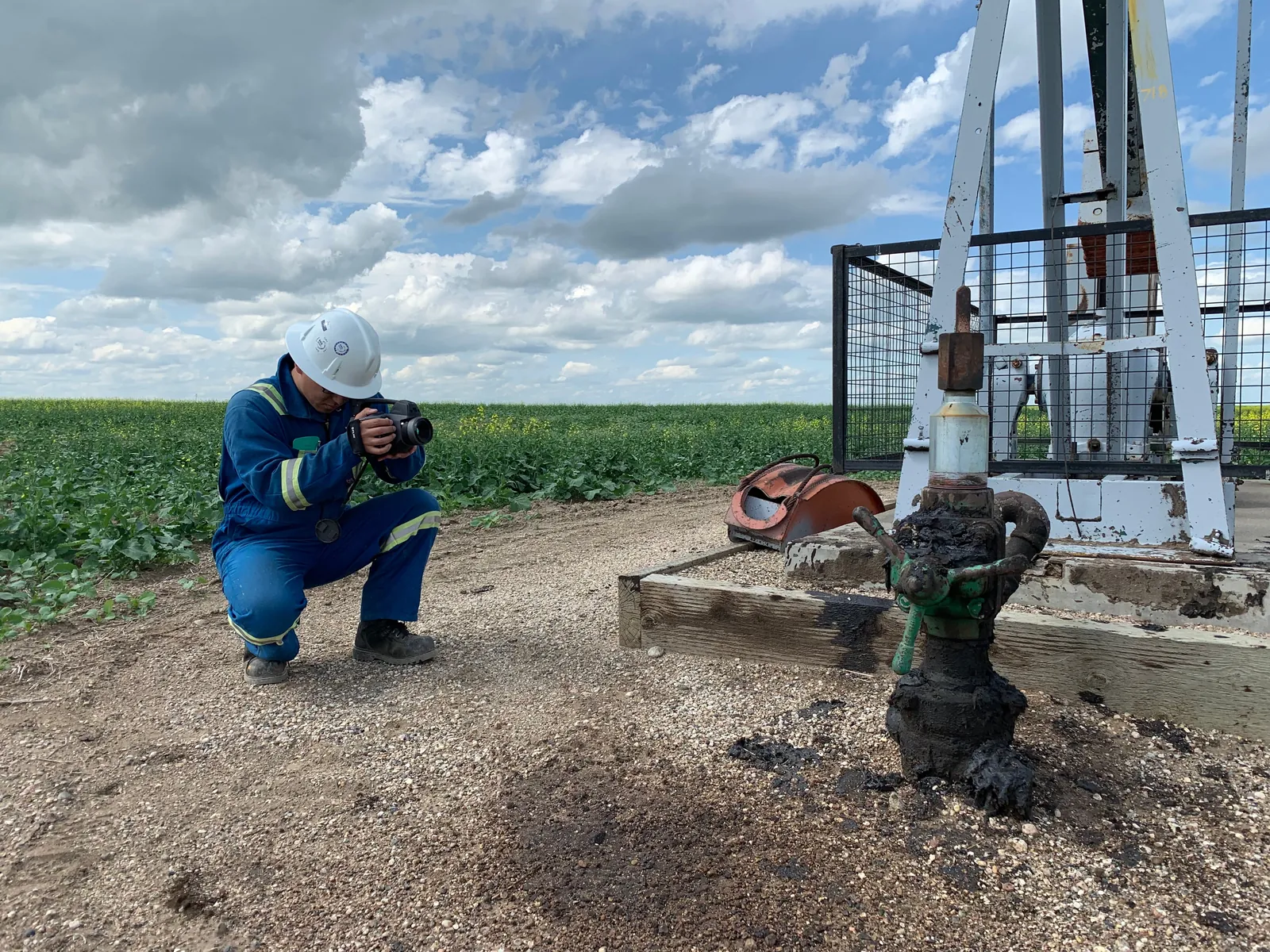
Wellhead inspection, 2019 2018
The loss that changed everything
Bought into the cannabis boom at its peak and lost my mother's entire savings, C$60,000. It is the reason I put risk and structure first today.
2020
Licensed (LLQP)
Earned the Life Licence Qualification Program licence and began advising on life insurance and segregated funds.
Today
Licensed in five provinces
Life insurance and segregated fund licences in British Columbia, Alberta, Manitoba, Ontario and Saskatchewan, working from Calgary with clients in person and online. Six years in, more than 300 families served.
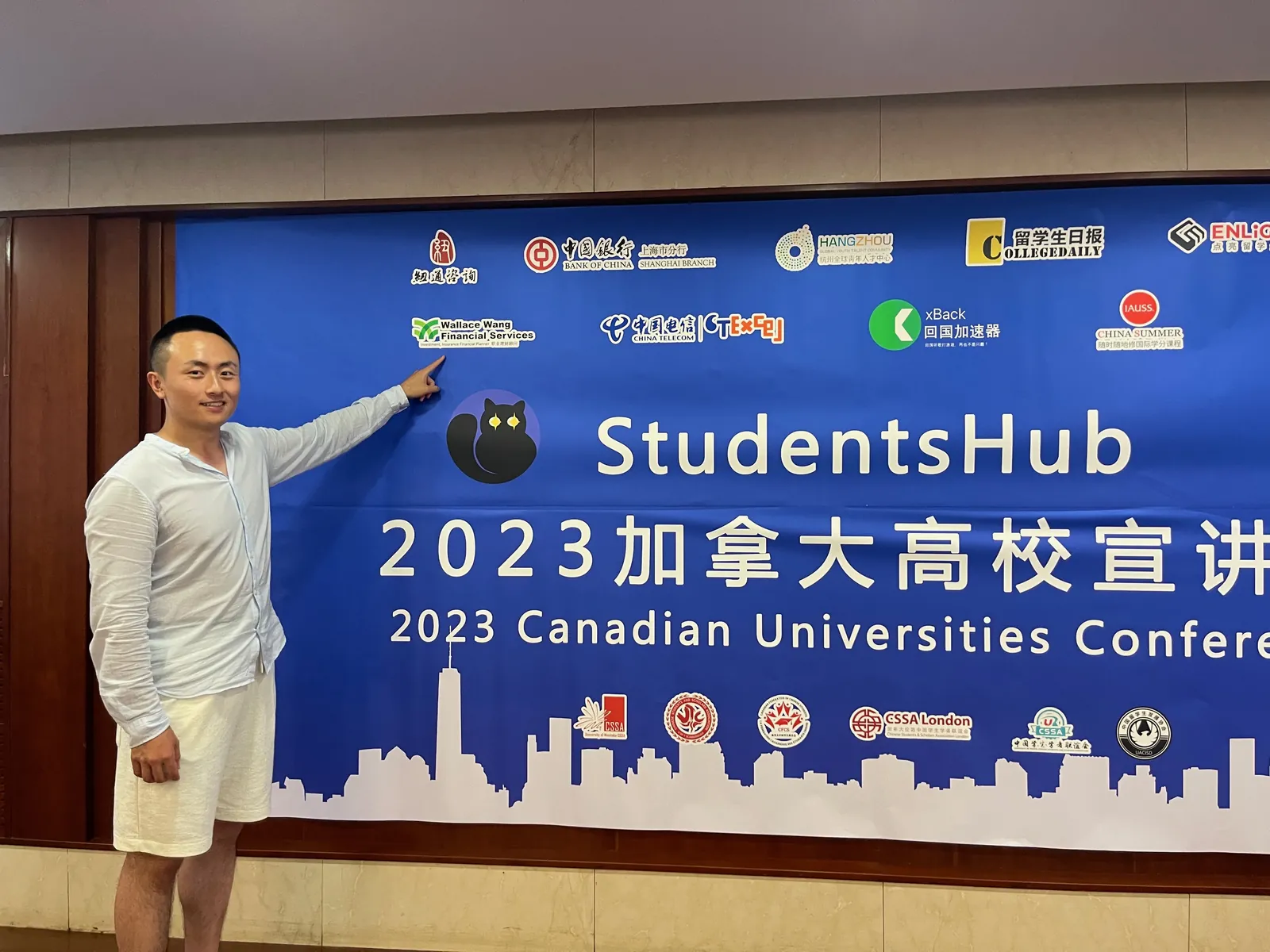
At the 2023 Canadian Universities Conference
Life outside the office
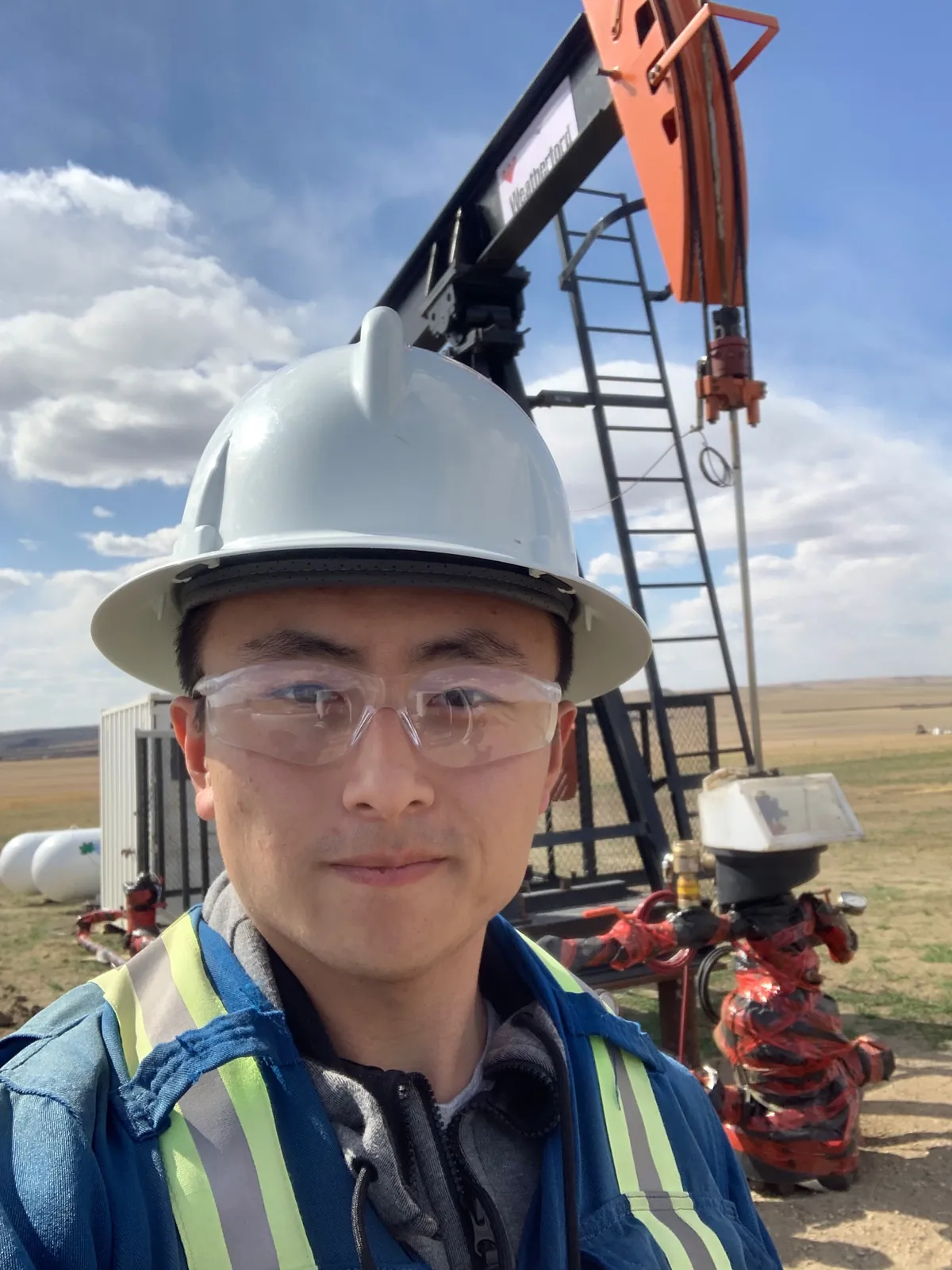



Check me out
Every licence, verifiable
Don't take my word for it. Each licence below links to the regulator's public lookup.
British Columbia
BC Insurance Council · LIC-2022-0037036-R01
Alberta
Alberta Insurance Council (AIC) · M-3236272-SP-2026 (Life) · Q-3236272-SP-2026 (A&S)
Manitoba
Insurance Council of Manitoba (ICM) · LIA-60164-2025
Ontario
Financial Services Regulatory Authority (FSRA) · 22209656
Saskatchewan
Insurance Councils of Saskatchewan (ICS) · 096549
Full details: credentials · professional profile
Latest on Instagram
What I'm talking about this week
Follow @wallacewang.caEducational content only, not personal advice. Your situation is different; talk to a licensed professional before acting.
Find me
The only accounts that are really me
Anyone else using my photo is not me. How to check
Important information. This page tells Wallace Wang's personal story and is for general information only. It is not financial, investment, tax or legal advice, and it is not a recommendation to buy any security or to borrow to invest. The options trading described above is shown as a lesson in risk; it is not a strategy Wallace offers or recommends. Wallace is licensed to sell life insurance and segregated funds in British Columbia, Alberta, Manitoba, Ontario and Saskatchewan; he is not licensed to advise on individual stocks, options, mutual funds or ETFs. Borrowing to invest magnifies losses as well as gains, the loan must be repaid and interest paid regardless of how the investment performs, and it is not suitable for everyone. Personal results mentioned on this page are Wallace's own, over a specific period, before fees and taxes; past performance does not guarantee future results. Segregated fund maturity and death benefit guarantees apply only on the terms of the contract, typically at maturity (often 10 to 15 years) or on death, are reduced proportionally by withdrawals, and guaranteed plans carry higher fees; fund values fluctuate. Interest deductibility depends on your circumstances and current tax law; consult a qualified tax professional. Assuris protection is subject to its own limits; see assuris.ca.