Starting From Zero in Canada: A Practical Financial Order of Operations
If you are starting from scratch in Canada, the order matters: use TFSA and FHSA room first, build income beyond a T4 paycheque, and consider leverage only after the foundation is strong.
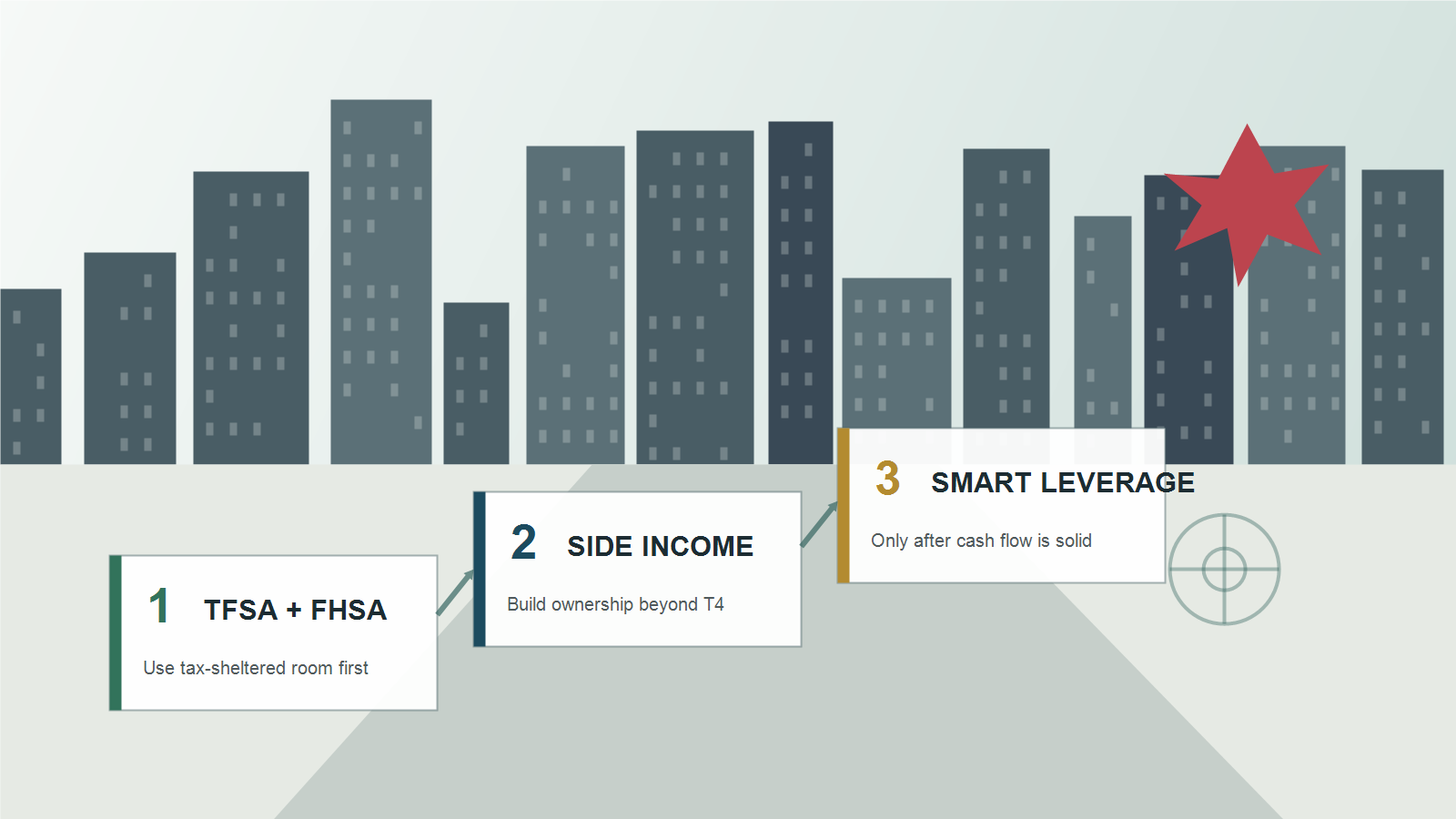
Starting From Zero in Canada: A Practical Financial Order of Operations
If you had to rebuild your finances from scratch in Canada, where would you begin?
For many people, the instinctive answer is simple: get a job, work hard, save as much as possible, and slowly build from there. Discipline matters, but in Canada, relying only on a T4 paycheque and after-tax savings can be a slow path. Income tax, payroll deductions, inflation, and housing costs can make progress feel painfully gradual.
A better question is not only "How much can I save?" It is "What financial system should I build first?"
For new immigrants, young professionals, families rebuilding after a setback, or anyone starting from zero in Canada, the order of operations matters. The sequence below is not a get-rich-quick formula. It is a practical framework for building a stronger financial foundation.
Step 1: Use Tax-Sheltered Accounts First
Before chasing complicated strategies, start with the accounts Canada already gives you.
The Tax-Free Savings Account, or TFSA, is one of the most flexible tools for Canadian residents. Contributions are made with after-tax money, but investment growth and withdrawals are generally tax-free. For 2026, the TFSA annual dollar limit is $7,000, subject to your personal contribution room and eligibility.
If you have not purchased a first home and you qualify, the First Home Savings Account, or FHSA, may also be worth reviewing. The FHSA combines two powerful features: eligible contributions may be tax-deductible, and qualifying withdrawals for a first home purchase can be tax-free. The annual contribution limit is $8,000, with a lifetime contribution limit of $40,000.
For someone starting from zero, these accounts can make the same saved dollar work harder. The point is not simply to save. The point is to save in the right location.
Step 2: Build Income Beyond a T4 Paycheque
A T4 job can provide stability, benefits, and predictable cash flow. But it also has limited flexibility. Employment income is usually taxed before it reaches your bank account, and most employees cannot deduct expenses the way a business owner can.
That is why building income beyond a paycheque can be a meaningful second step.
This does not mean quitting your job immediately or opening a corporation too early. A side business, consulting work, freelance income, professional services, digital work, or another legitimate income stream can help you begin learning the difference between employment and ownership.
Once the income becomes consistent, incorporation may be worth discussing with qualified professionals. A corporation can allow legitimate business expenses to be handled at the business level and may provide different compensation options, such as salary and dividends. However, incorporation is not automatically better for everyone. It comes with accounting costs, legal responsibilities, compliance work, and tax planning decisions.
The broader lesson is simple: employment and ownership are different financial games. If you want to rebuild faster, relying on only one income structure may limit your options.
Step 3: Use Leverage Only After the Foundation Is Strong
Borrowing to invest can sound attractive, especially when investors hear that interest on money borrowed to earn income may be deductible in certain situations. Used correctly, leverage can help assets compound faster. Used poorly, it can create serious risk.
This is why leverage belongs last in the sequence.
Before using debt to invest, you need stable cash flow, emergency reserves, suitable investments, proper account structure, and a clear repayment plan. If markets decline or interest rates rise, leverage can magnify losses just as easily as it can magnify gains.
In some cases, people may borrow against investment accounts, home equity, or business assets to invest. Whether the interest is deductible depends on the use of borrowed money, the income-earning purpose, and the details of the structure. This should be reviewed with tax and financial professionals before implementation.
Leverage is not the foundation. It is a tool that may be considered only after the foundation is already solid.
The Right Order Matters
If you are starting over financially in Canada, the goal is not to move fast at any cost. The goal is to build in the right order:
- use tax-sheltered accounts such as TFSA and FHSA first;
- build income beyond a single T4 paycheque;
- consider incorporation only when the business case is real;
- use borrowing and leverage only after cash flow and risk controls are strong.
The difference between two people starting from zero is not always who earns more at the beginning. Often, it is who builds the right system earlier.
This article is for general educational purposes only and does not constitute tax, legal, investment, lending, or insurance advice. Please consult qualified professionals before making decisions based on your personal situation.